
Paul Holston, IAAM Marketing & Communications Manager
paul.holston@iaamuseum.org
IAAM Marketing, media@iaamuseum.org
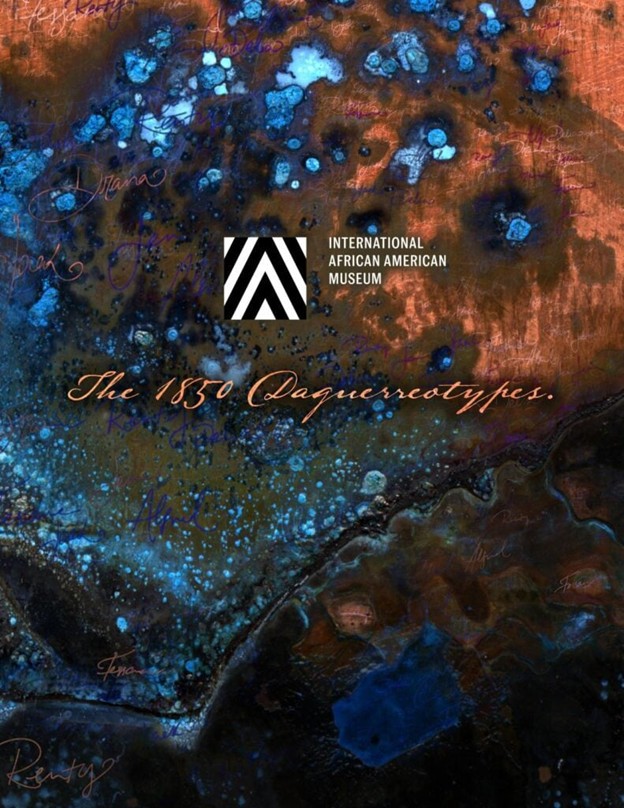
(Black PR Wire) Charleston, S.C. – More than 175 years after they were created in South Carolina, The 1850 Daguerreotypes, believed to be the earliest known photographs of enslaved people in the United States, have returned to the state where the individuals depicted were enslaved and forcibly photographed.
Now under the stewardship of the International African American Museum (IAAM), these images are being reframed from instruments of pseudoscience into portraits honoring the lives and humanity of the individuals they captured. The seven individuals depicted in IAAM’s collection of The 1850 Daguerreotypes are: Alfred, Delia (daughter of Renty), Drana (daughter of Jack), Fassena, Jack, Jem, and Renty.
“IAAM is honored to take over stewardship of these images because preserving the stories of African American history and reckoning with the stories of the founding of our nation is not only our mission, but a call to action for all of us,” said IAAM’s President and CEO Dr. Tonya M. Matthews. “The full interpretation of these images will be transformational, moving the narrative from one of dehumanizing intent to one of the intersections of trauma, resilience, self-determination, and authentic, empathetic memory.”
“This museum reflects a ‘power of place’ and we have a special responsibility,” says Matthews. “We are located at the site of Gadsden’s Wharf – a prolific former slave trading port – and evidence suggests that some of the individuals in these images came into this country right through our very location.”
Originally commissioned in 1850 by Harvard scientist Louis Agassiz and photographed by Joseph T. Zealy in Columbia, South Carolina, the images were part of a scientific project intended to support theories of Black inferiority and polygenism. Today, IAAM is transforming these images into portraits of remembrance and historical truth.
The return of these artifacts carries profound historical symbolism, as the IAAM stands on the historical site of Gadsden’s Wharf, the entry point for over 40 percent of captive Africans brought to North America. For the museum, this moment represents a “homecoming:” A reconnection of untold stories and histories separated by slavery and the African Diaspora.
“This is a moment when we return these formerly enslaved men and women to the community and to the history from which they were so wrongfully extracted…a final fitting resting place; a place that celebrates their legacy and restores their humanity,” said Tamara Lanier.
The arrival of the collection follows years of dedicated advocacy by Lanier, a descendant of Renty and Delia. Her efforts brought national attention to the images and catalyzed a global conversation regarding the ethical stewardship and repatriation of materials connected to enslaved people. IAAM’s Center for Family History also assisted in linking her genealogical ancestry to both Renty and Delia.
“By bringing these daguerreotypes here to the International African American Museum, just a stone’s throw from where they were first brought to these shores in chains, we are saying that the era of exploiting Black pain for institutional gain is over,” said civil rights attorney Benjamin Crump. “This is a blueprint for how institutions must address their complicity in the darkest chapters of our history.”
IAAM took stewardship of the original 15 daguerreotypes from Harvard University in late 2025. Because the silver-plated copper plates of the daguerreotypes are extremely sensitive to light and environmental exposure, concept for exhibition currently in planning stage includes a plan for rotating images to preserve and properly care for these sensitive artifacts.
A new exhibit to celebrate the inaugural IAAM Homecoming is scheduled to open in late October 2026 to the public to allow for unique community engagement and interpretation. IAAM will be utilizing a trauma-informed framework for the collection, prioritizing people-first language and centering on the humanity of those depicted over the pseudoscientific project that originally produced the images.
“It is our greatest honor to feature Alfred, Delia, Drana, Fassena, Jack, Jim, and Renty in a new exhibit that will tell their stories,” said Malika N. Pryor, IAAM’s Chief Learning and Engagement Officer. “It is more than a homecoming; it is a homegoing, where our ancestors finally get to be properly laid to rest and cared for as they always should have and deserved to be.”
IAAM is currently expanding its membership base and seeking philanthropic partnerships to support the long-term stewardship of The 1850 Daguerreotypes. As the museum navigates a broader landscape of shifting philanthropic support for African American historical institutions, it continues to prioritize community-driven funding to sustain its core exhibitions and restorative justice programming. For more information on the museum’s mission and development initiatives, please visit iaamuseum.org/support.
About the International African American Museum
As one of the nation’s largest African American museums, the International African American Museum (IAAM) explores the history, culture, and impact of the African American journey on Charleston, South Carolina, the nation, and the world. IAAM shines light and shares stories of the diverse journeys, origin, and achievements of descendants of the African Diaspora. Located at the historically sacred site of Gadsden’s Wharf, IAAM honors the untold stories of the African American journey. Learn more about IAAM at www.iaamuseum.org and follow IAAM on Facebook, Instagram, BlueSky, TikTok, and LinkedIn.
Source: The International African American Museum (IAAM)